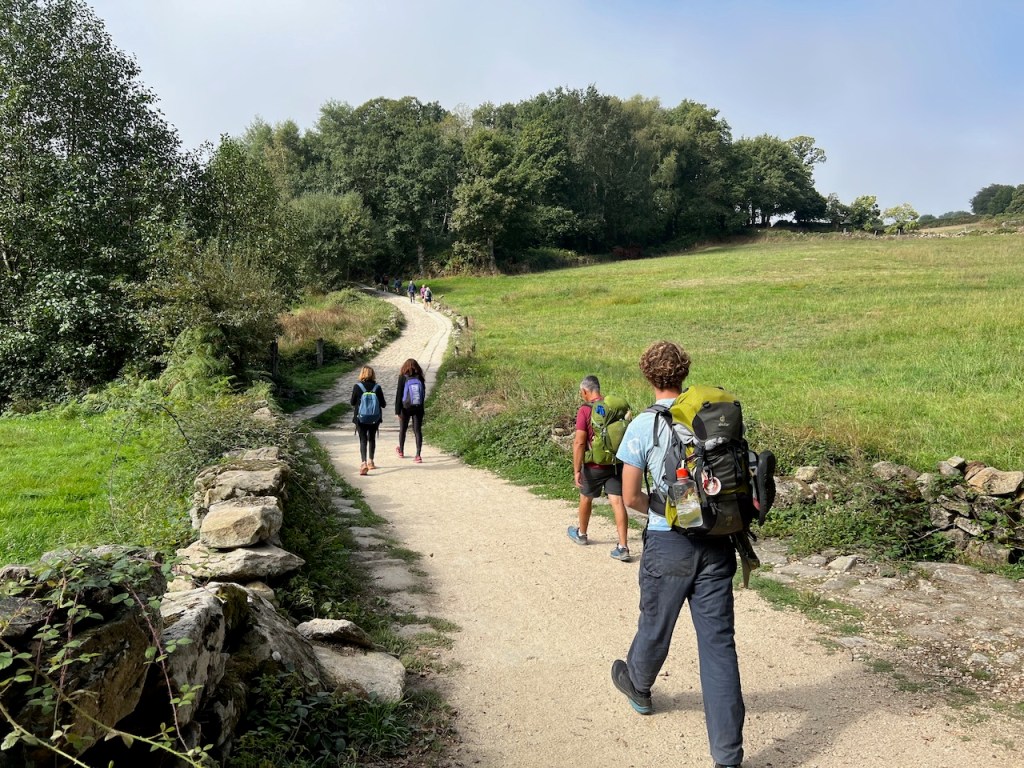
We had been informed (not to say forewarned) that the final stretch of the Camino de Santiago between Sarria and Santiago de Compostela has many more people on it than the rest of the way.
Coming out of the albergue in Portomarin in the early morning darkness, with L. and D., looking for a place for breakfast , we found a cafe. Ominously, a bus was parked near it. We found a place to sit in the cafe but were then told to leave (!) – I guessed that there was some kind of bus tour that had booked the entire cafe. We found something to eat in a nearby hotel, where the welcome was not much friendlier, but we were at least allowed to stay and get something to eat before starting.
As we left at 8 AM, it appeared that the doors of every albergue and cafe (and bus) in town swung open, and walkers headed out all at once in a single file threading down out of the town.
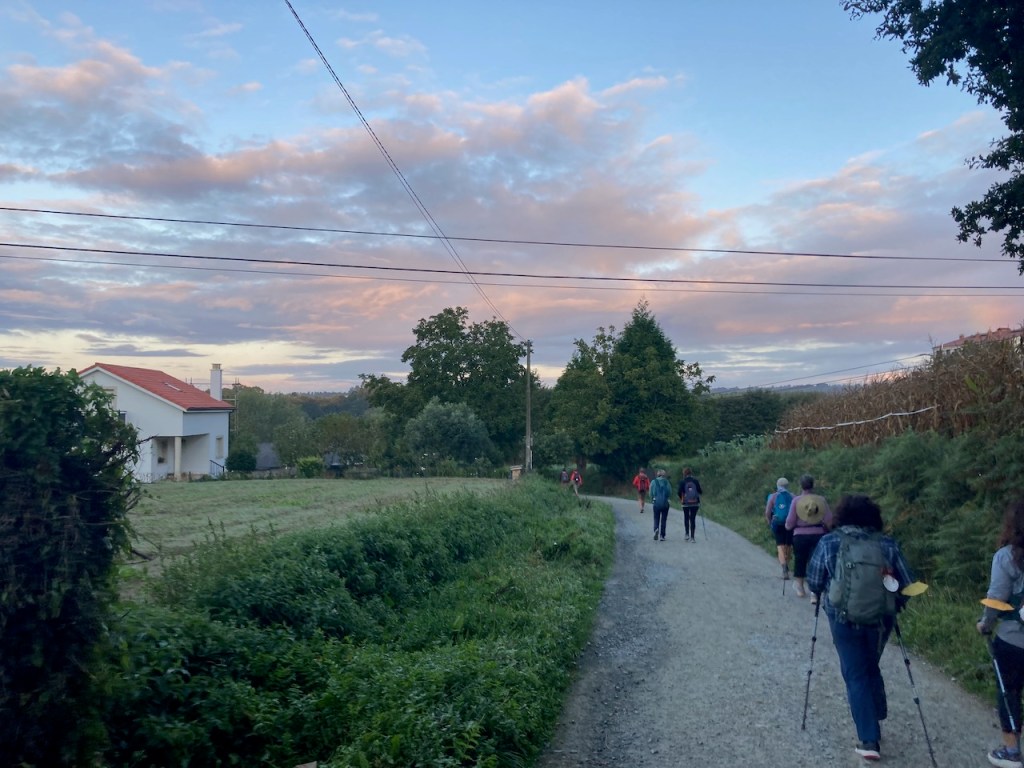
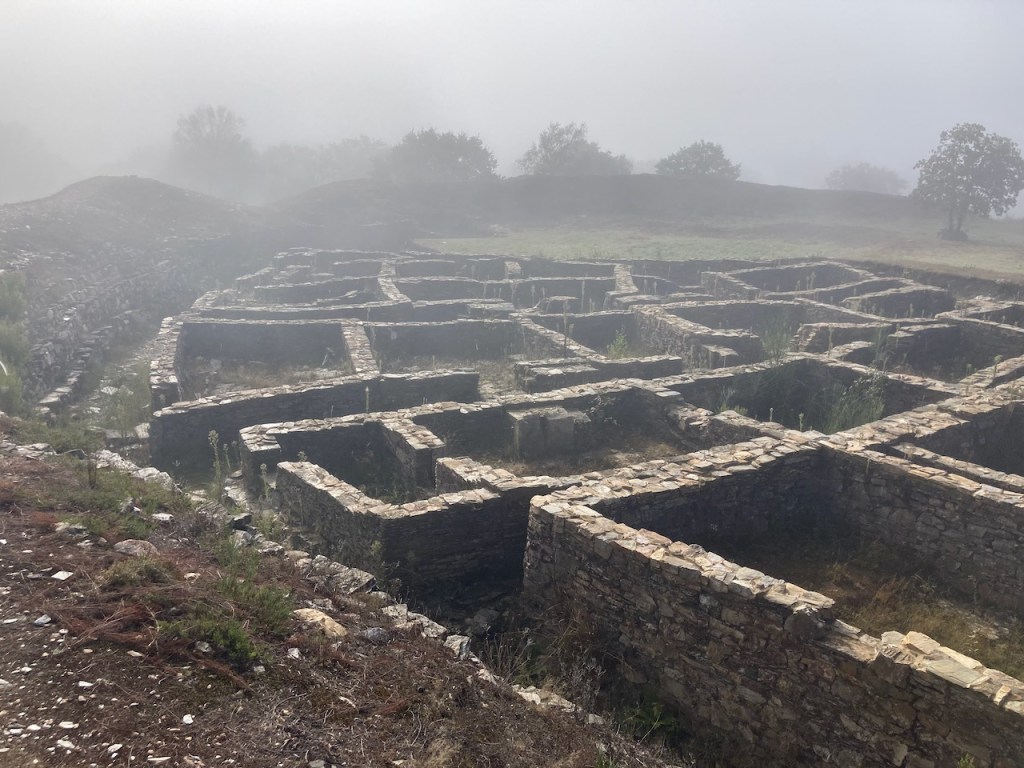
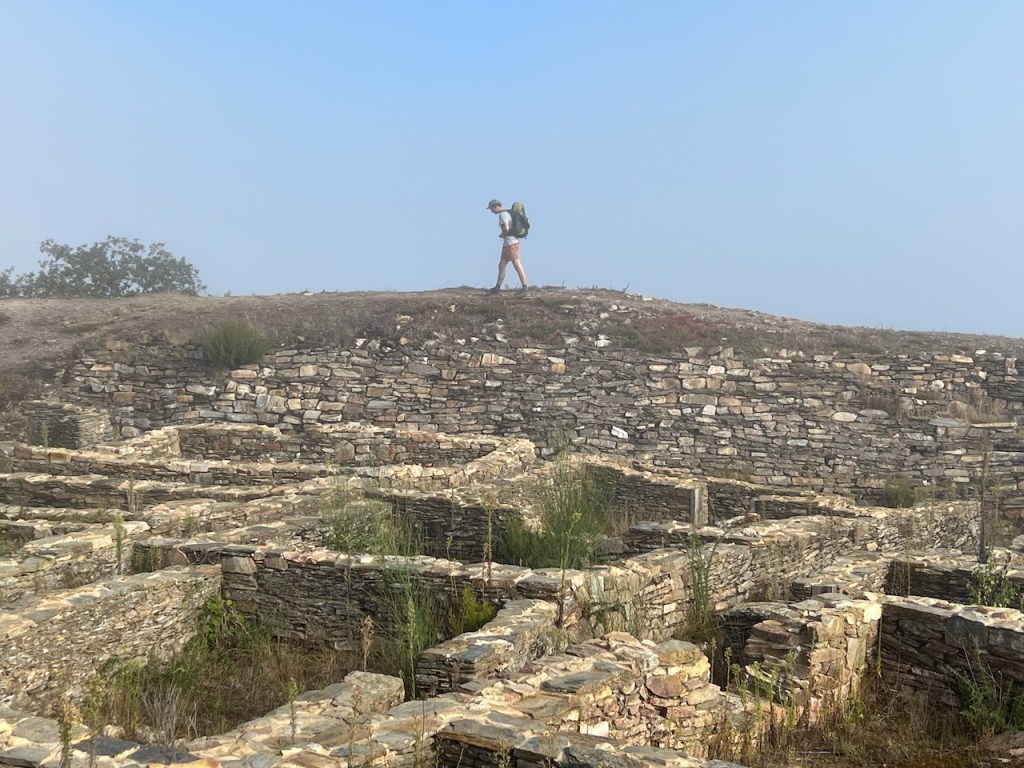
Outside Castromaior, about 350 meters off the Camino, we found an amazing archaeological site . There is an ancient hill fort with buildings dating from the Iron Age (2,400 years ago) as well as from the Roman period. There was no visitor infrastructure around it, we were free to simply explore it in the early morning Galician mist.
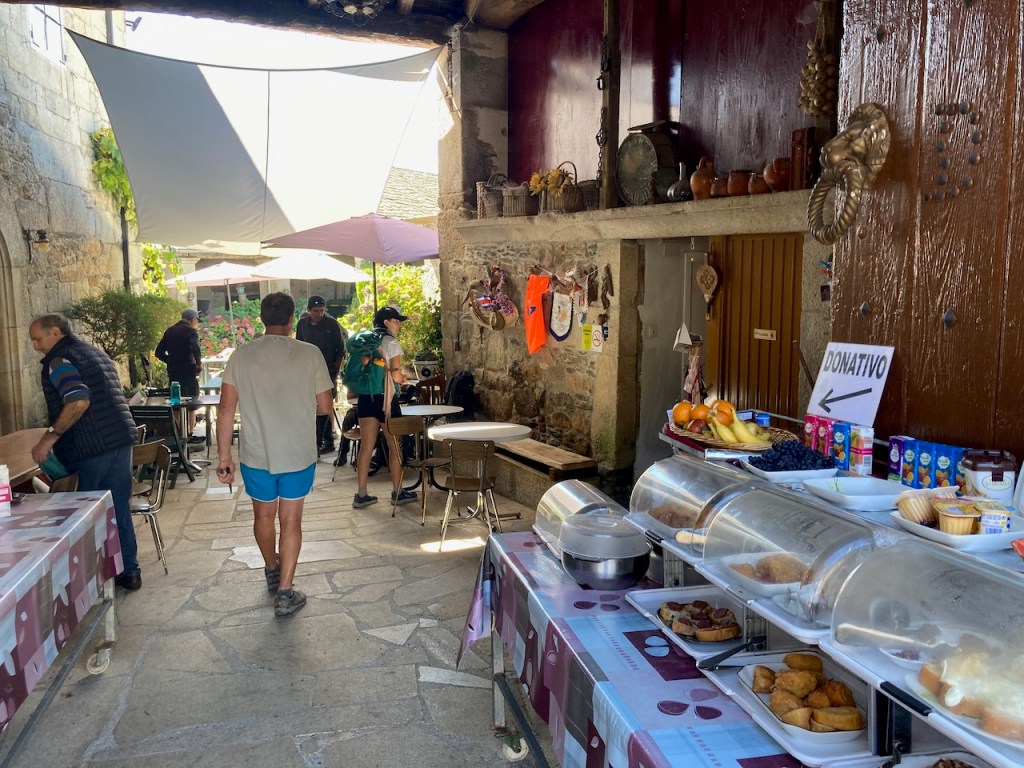
We came across this wonderful donativo rest stop. There were all kinds of delicious food offerings, and a quiet and beautiful back garden. All provided for whatever donation we wanted to give, by a kind gentleman.
L. and D. and I stopped at an attractive cafe right alongside the Camino. We sat outside on a stone wall drinking coffee , and we got chatting with an American man who had retired to Spain and now lives on the Costa del Sol. He asked me if I had an injury , if anything was broken in my body. I said I was fine, thanks, and he appeared a bit disappointed. He then exclaimed “If anything is broken, I can heal it! In Jesus’ name! With my touch!”. We said polite goodbyes and headed down the road immediately.
The number of people on the walking in this stretch was never really extreme for my taste, but it did vary strangely. It seemed that some groups of people were getting onto the Camino from buses or vans, walking for a while, and then getting picked up again later, a bit off the Camino. Thus groups of people would appear and disappear even more frequently than on earlier stages of the Camino. We talked to a group of people from one such van, and they asked where we were staying. We started to explain about the albergues, and one person asked, “What is an albergue”?
We got into our day’s destination town of Arzua early, and after finding the albergue, we had time to explore the town. We saw some sound equipment being set up on the plaza, and after inquiring with some local people there, found that there was going to be a concert at 8 PM. We returned then, and found the whole town there, with people of all ages enjoying a concert of folk music with singers and Galician bagpipers in full costume.
On the last day, we made our way into the outskirts of the city Santiago de Compostela . It finally got to be a significant procession of pilgrims threading its way through the winding streets of the old city center. I noticed local people looking down with what looked like approval, from the upper stories of the 17th and 18th century buildings on either side of the streets.
We entered a passageway which opened out onto a large square called the Plaza del Obradoiro , in front of the Cathedral . We put down our packs , sat or laid down and took in the scene. There were already many groups of pilgrims celebrating there in the sun, and as we relaxed there we could see more of them coming through the entrances to the plaza, with different entrances corresponding to different routes to Santiago across Europe, such as the Camino Frances and the Camino Portuguese.
You may also encounter a surprising number of other pilgrims that you have met before somewhere along the way, right there at the Plaza at the same moment. And for people that you don’t know, when you watch the interactions as people arrive, you can imagine the events, places, people, difficulties, and high points that they experienced over the long path across Spain or even further.
The city of Santiago was overall beautiful and charming, but more than any place else, we found ourselves returning again and again to the same Plaza del Obradoiro, to see the pilgrims who continuously arrive throughout the day. The community feeling, almost euphoria, was like nothing else I have experienced.

 Along the Way