We were aware that the way would start increasing in elevation, but were not yet expecting any wind or rain.
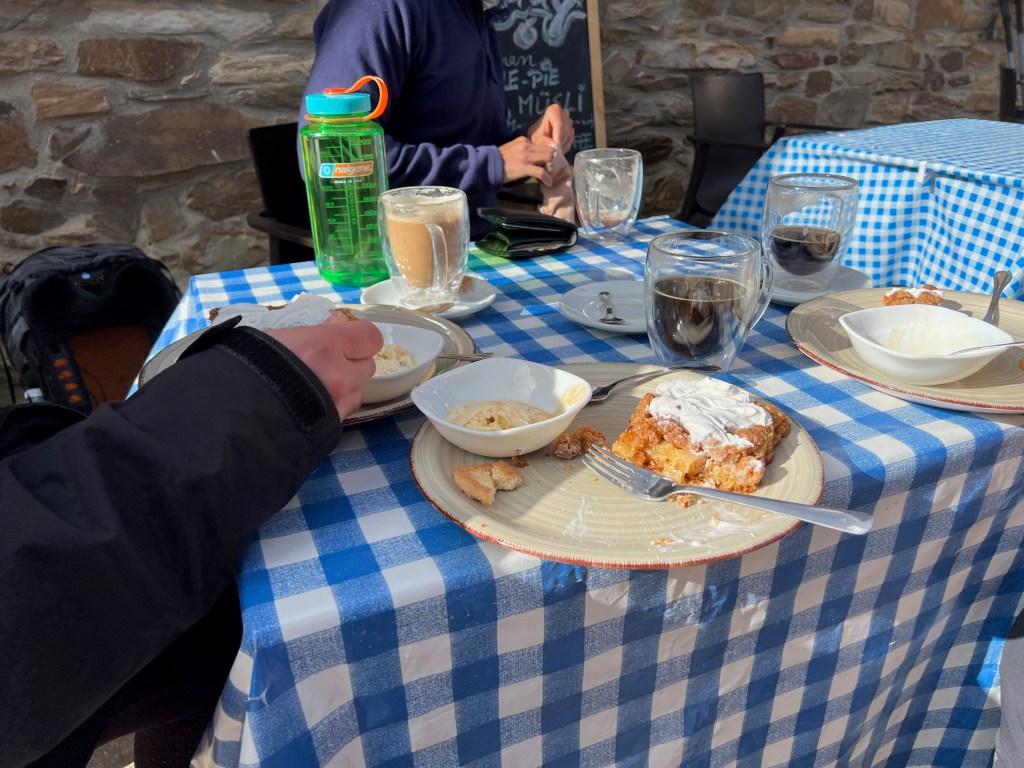
We stopped in a small town called El Ganzo. There is an expatriate German family living there who are running a cafe that offers German style pie with ice cream. The couple was extremely outgoing, and my fellow peregrinos got into an extensive discussion into what life was like there. It transpires that houses can be purchased here for comparatively little money, probably because the town is so isolated. We also got into a short discussion with their son about bears in Spain (it turns out that bears exist there, but only high up in the Cantabrian mountains, and are extremely rare – numbering perhaps only about 300 in total.)
This is one of the houses on sale there.

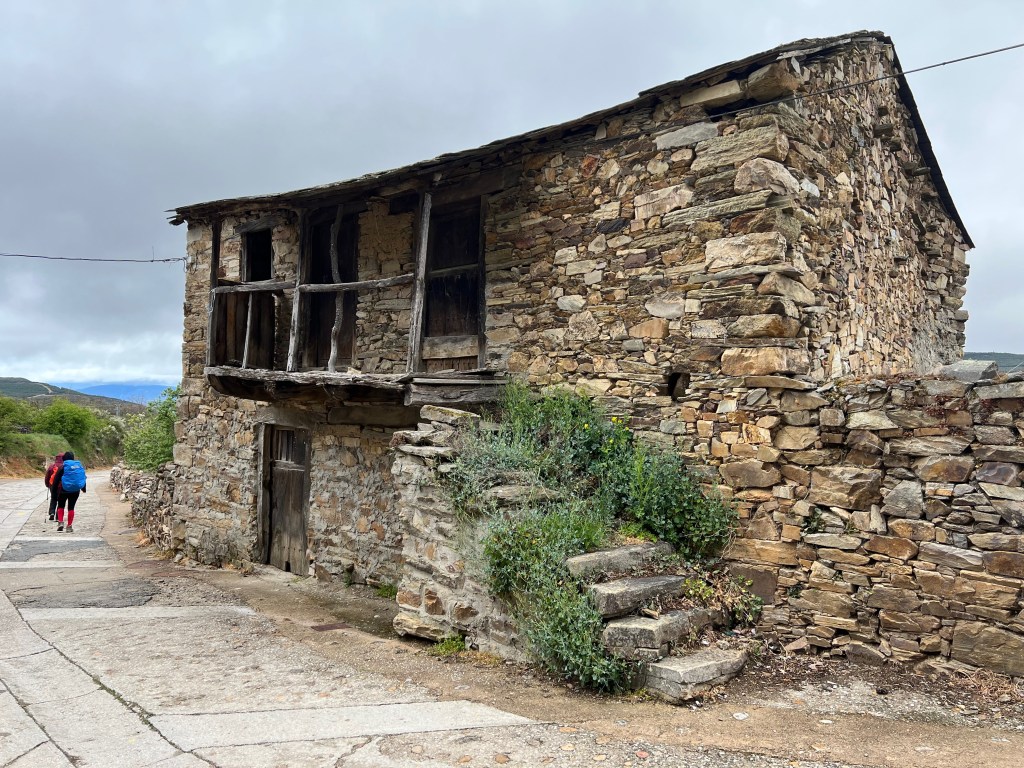
This house was not on sale, would need some work beforehand
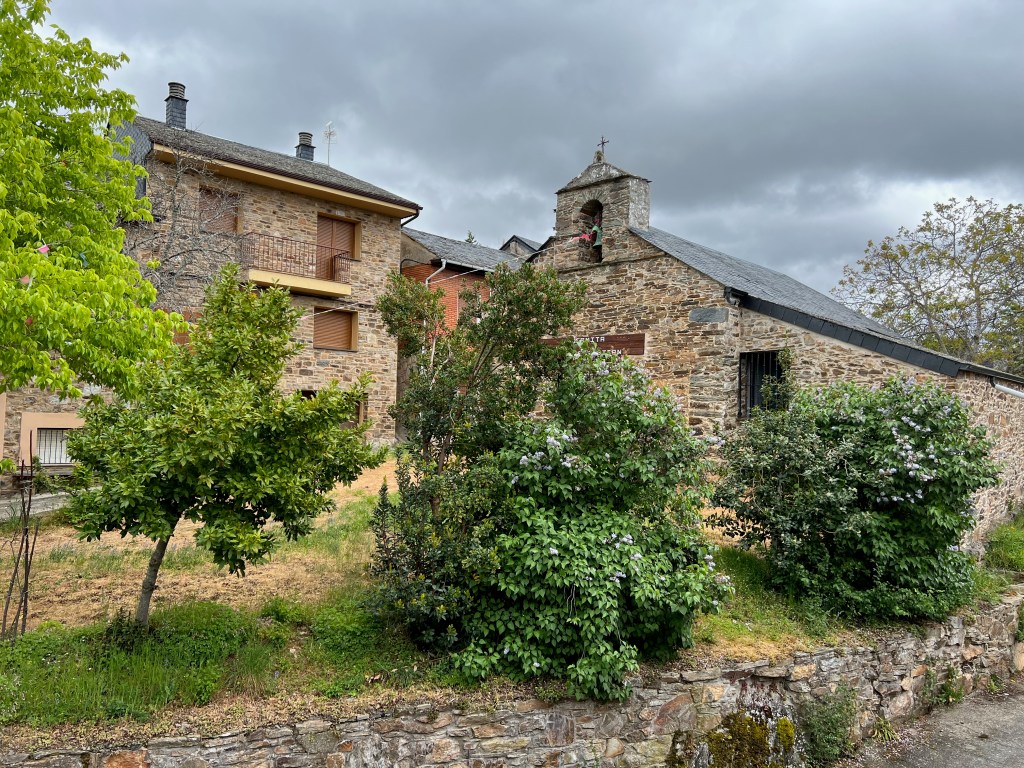
Leaving El Ganso – if you look closely you can see a stork flying towards its nest in the church belfry.

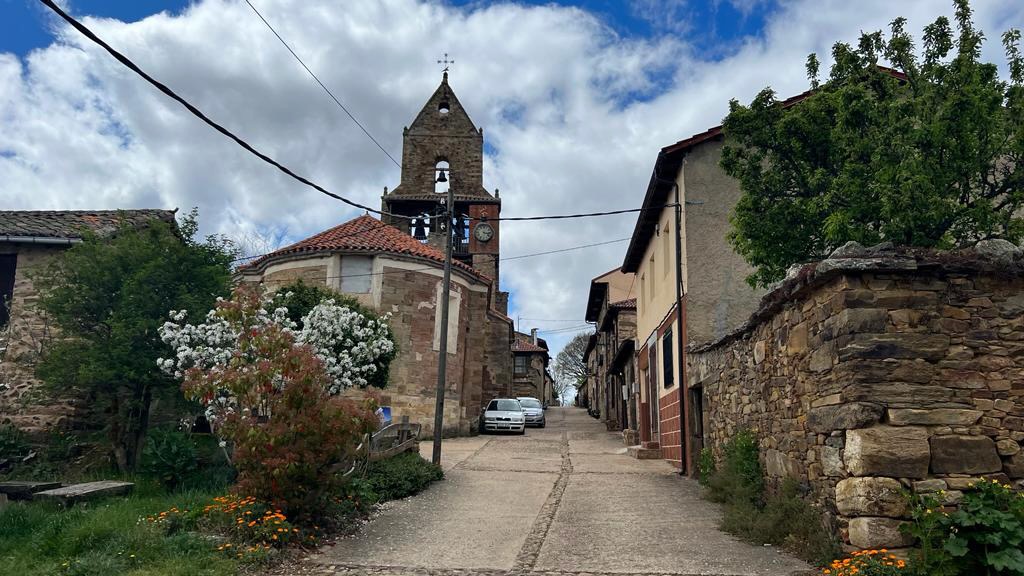
Continuing on, we made our way up to the village of Rabanal. The buildings are mostly of stone, and the few streets are winding and steep. Our place for the night was a relaxed albergue that featured a bar at the front terrace. We met some new people there. One was R. from Sweden who we met (fatefully, as it turned out) at the bar. A. and C. met a young person right away who immediately shared his life story including a decade of drug addiction and a near-death experience. The Camino is a way for him to get beyond that.
This is an albergue in Rabanal, run by a group of Camino enthusiasts in England.

I visited the church in the middle of the village – made of stone, small, simple, ancient, dark, almost cave-like. However is was not unpleasant inside, perhaps because there friendly people around, including a few smiling and chatty monks. I found out that there is Gregorian chant sung there later in the evening, and I made a mental note to return then. I went on a search to replace one of the several Iphone accessories that I lost on the trip, and found one in a tiny shop. The shop was so small that it seemed to contain only a few apples, some shampoo , and thankfully a charger cable.
There was a communal kitchen in the albergue, and C. made spaghetti with vegetables such as carrots, mixed in. We ate with some of the new people that we met (however R. ate dinner out in the cafe with some bottles of wine.)
Not much for breakfast the next morning – for us, Just a couple of energy bars while packing , in the pre-dawn. Although for R. , what I later heard from him, is that he partakes of what he proudly calls a “Viking breakfast”, which apparently consists of a copious amount of beer.
With impeccable timing, rain started coming down as we left the gates of the albergue. This gave me a chance to break out my rain gear for the first time.
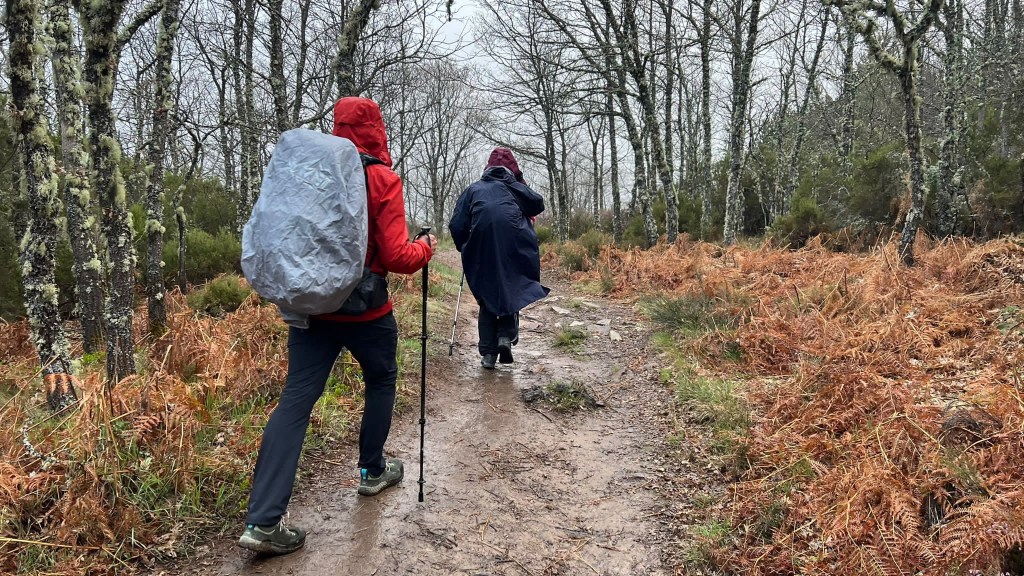
Starting out up the path, the landscape was relatively is open, and exposed. There were few trees , rather mostly smaller plants which look similar to heather, or bloom, as found in Scotland. They were all blooming now in late spring, with white, yellow, blue, and purple. The uniform white light coming down from the cloudy sky made them seem to glow somehow.

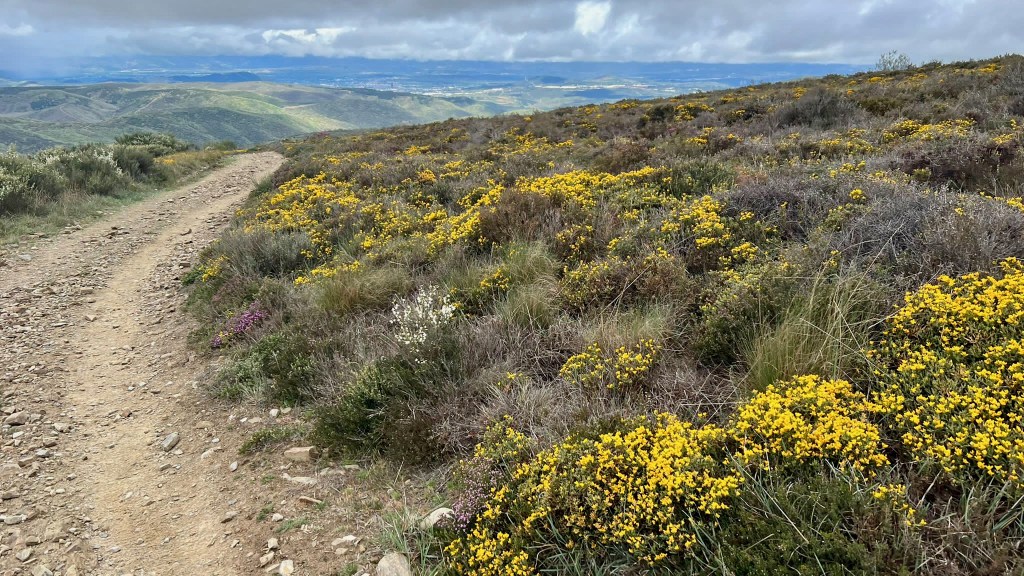
There were strong gusts of wind and showers of rain. I felt that the walking was OK under these conditions, but what if the wind and rain got stronger?
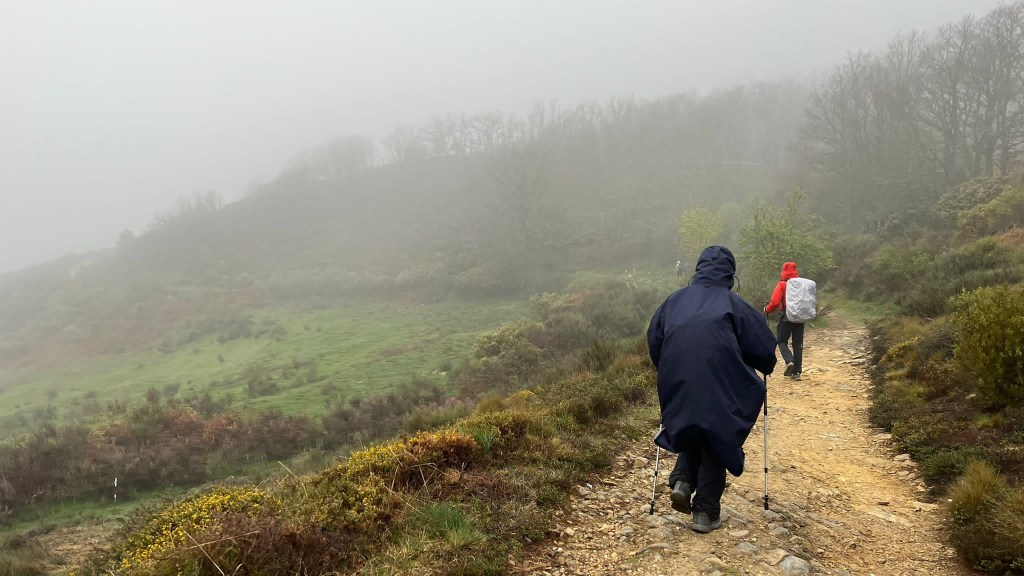
We arrived at the hamlet of Foncebadon, which is notable for being highly feared by Hape Kerkeling as described in his book “Ich bin dann mal weg”. The rumor then was that it was uninhabited, except for aggressive, wild dogs. We found no wild dogs, but did find a restaurant open and ducked inside, because we still had not had a proper breakfast that day, and a cold rain was starting to pelt down more strongly. The proprietor did not mind us stumbling in with our dripping clothes and backpacks, and graciously made us coffee and huevos fritos. Did we express our gratitude profusely for that? Not really, but among ourselves we did feel free to criticize the restaurant furniture and wall paintings.

The appearance of the Cruz de Ferro (Cross of Iron) is unprepossessing. It consists of a wooden pole with a cross on it, upon a mound of stones. The significance of it relates to other factors. It is thought to have originated in Roman (or even pre-Roman, i.e. Celtic) times. Mounds of stones are believed to have marked boundaries between ancient regions of the country. A tradition has developed around this place whereby pilgrims carry a small stone with them in their backpacks until they reach here. Then they deposit the stone on the mound, often writing personal thoughts or remembrances on the stone or paper attached to it. I brought a stone which had been found by my brother B. on a beach in California. It contains fossils from the ocean floor which are estimated to be about six million years old.
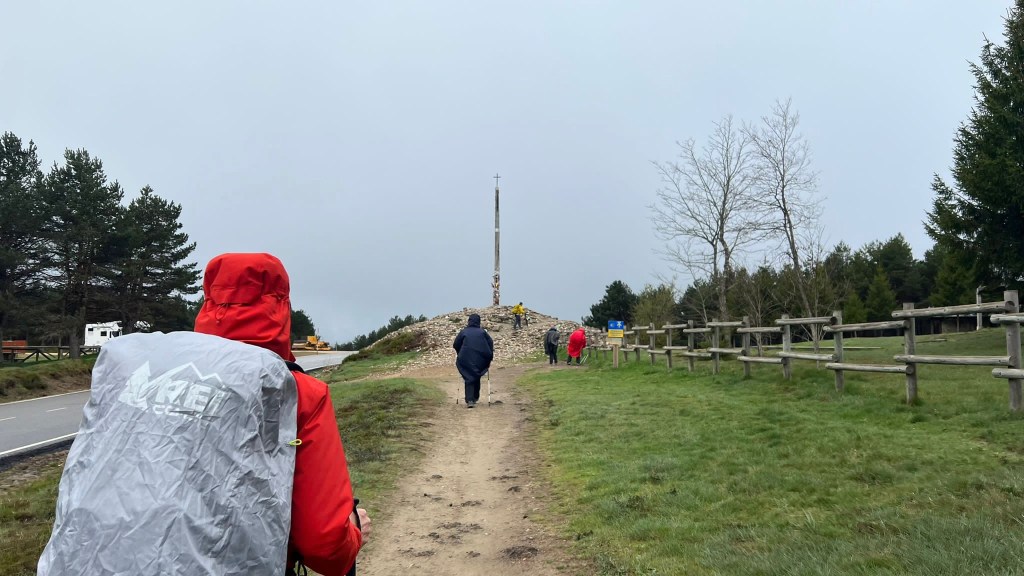
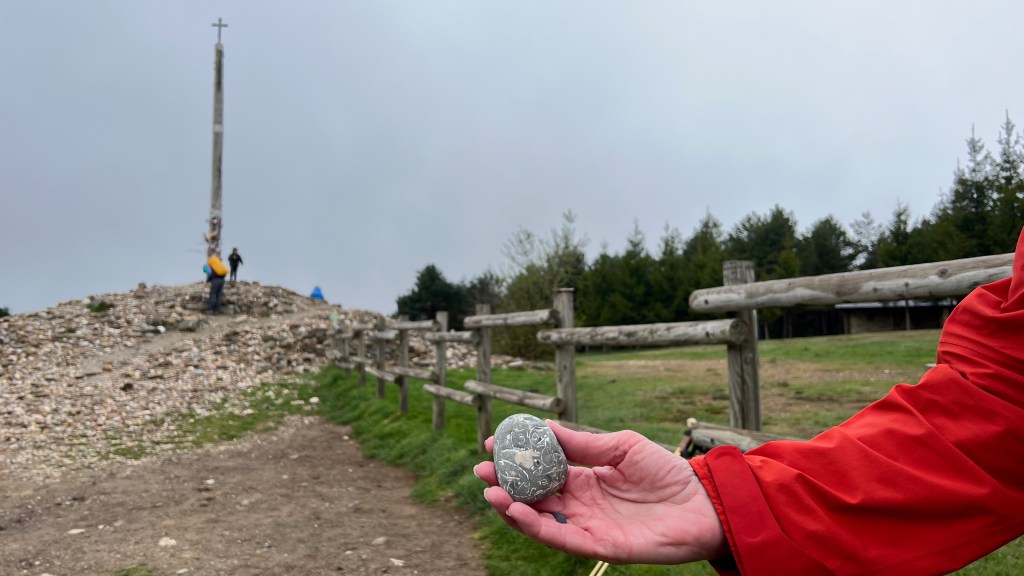
At 1,504 meters, the Cruz de Ferro is a high point in elevation. Now comes the downhill, still beautiful, but long, steep, rocky, and with the rain, slippery. I would think that stretches like this would not be fun without trekking poles. There is a road for cars which more or less parallels the track. I have to admit that we resorted to taking the road sometimes , when the terrain got a bit too crazy for us. Note to self: for traffic visibility, have more colorful rain gear.
View from a window of the place where I stayed at the end of the day, in a small village called Riego de Ambros.
 Along the Way