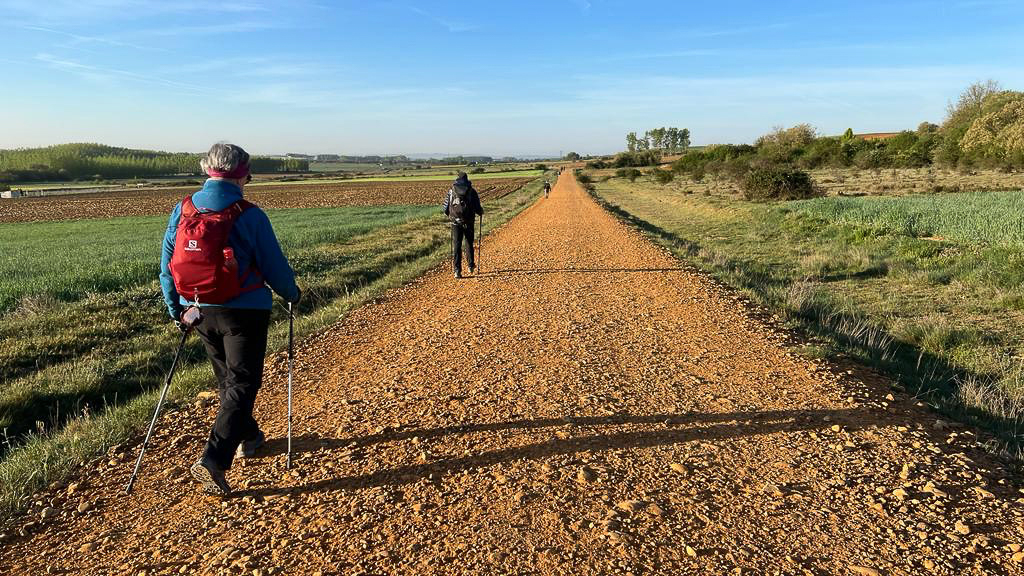
On the way from Hospital de Orbigo, walking through a farm and meeting a curious calf …


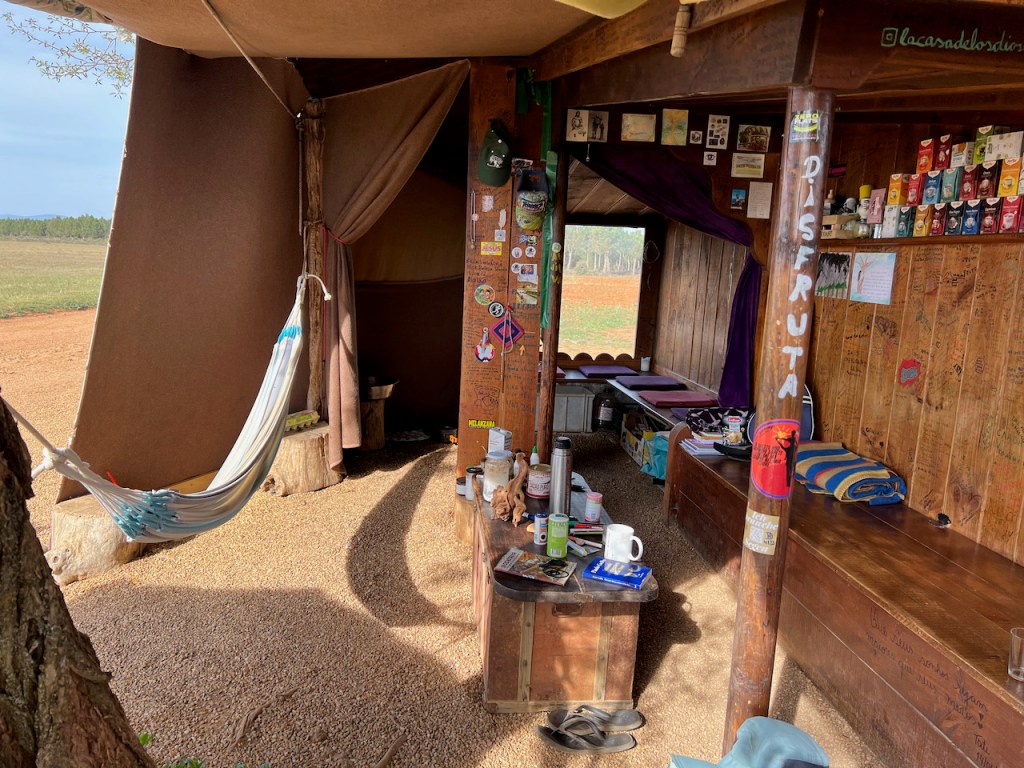
On a stretch of the way which would otherwise be without facilities , we came to a ‘donativo’ – a rest stop with lots of good food, by donation. The friendly man providing all this, lent the place a relaxed atmosphere.


Astorga in the distance
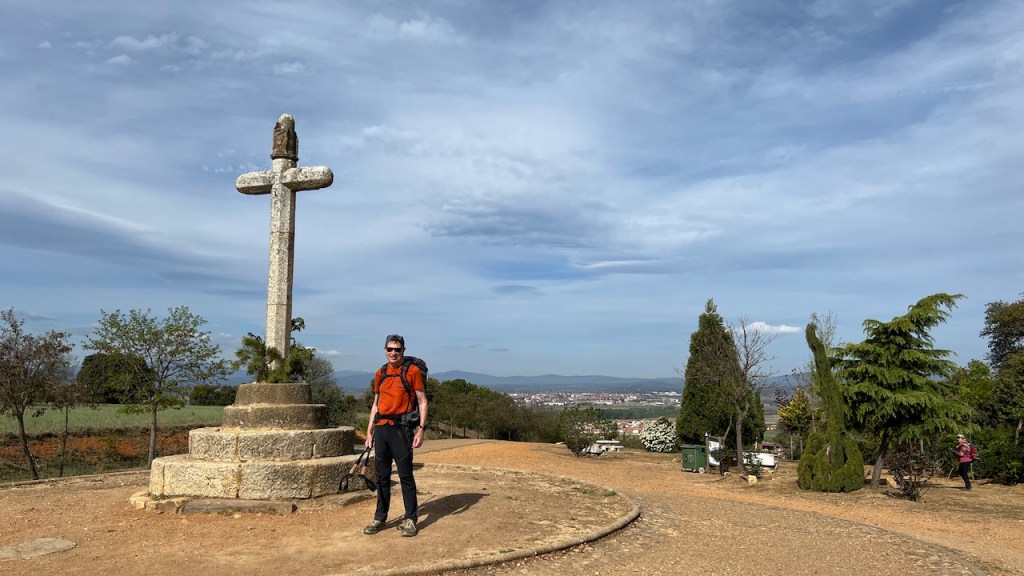
At length, we approached Astorga. For anyone on a long-distance trek coming to the end of a day’s stage, there are some things in common. In this case, we are hot. We are somewhat exhausted from walking so far with the backpack on. We are dehydrated. We are hungry. Therefore we are encouraged to see the city up ahead, on a height. We can even see the albergue where we will be staying, It now appears so close. One can already imagine cooling off in the shower, then getting something nice in a cafe, then resting on the bed.
But no …
There is a large , strange green structure on the path between us and our goal . Instead of going forward, we now need to walk to the side for a long way on a shallow ramp, gaining height of about 2 feet, then, turn around the opposite way on a shallow ramp, again and again. Then we must reverse the process, with long ramps back and forth .
Eventually we emerged on the other side of some train tracks. I found out later that this structure is referred to as the “Pilgrim Torture Tower.”

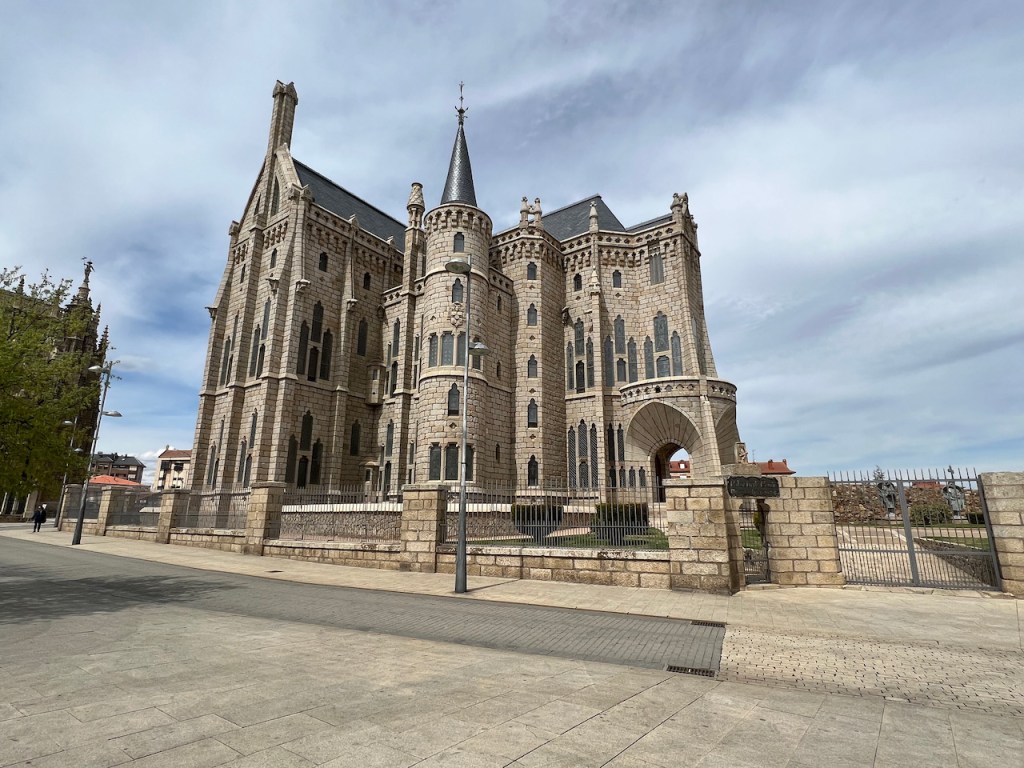
Astorga has been a crossroads for millenia, and was an important Roman town. There are interesting Roman buildings in the town to explore.
This building is a work by Gaudi. It was intended as a residence for a bishop. However, the bishop that it was intended for decided that it was too ostentatious, and never lived there. To build something too showy for a bishop is really an achievement, when you recall that bishops regularly wear golden, conical hats.
Eventually we got to the albergue. Later as I was in the common area, a guy dressed in a robe , with flowers in his hair, wafted in , went out on the terrace, and floated back in and away again. About a week later , someone I met asked me if I had also met this person. He said that he had met him out in field. Without wearing a robe, only with the flowers in the hair.
The kitchen at the albergue was small. At dinner, it was packed with hungry pilgrims attempting to cook different dishes with high carb content, in clouds of steam. It was a bit too crowded and chaotic for me to deal with , but fortunately A. and C. were able to make spaghetti.
One of the people in the tumult in the kitchen was a guy with black hair and beard, who seemed vaguely put out and annoyed. We got to chatting with him at dinner. He had been on another Camino way called the Via de la Plata, which starts in Seville and joins the Camino Frances here in Astorga. In his opinion there are far too many people on the Camino Frances, and “the magic is gone”. It seems to be true in any case that the various Camino routes have drastically different numbers of people who walk them. For the lesser known routes, especially in the non-peak times, from what I read, people report meeting only a few, or even no other pilgrims, in a day of walking. Whereas there are something like 50,000 people who start each year from Saint Jean Pied de Port.
I can somewhat understand what he meant. Later on the Camino in the mountains of León, I was accidently off the main Camino Frances path for a few kilometers. It did have a different feeling. No special signage or infrastructure, just the resident people going about their business in the villages or fields.
 Along the Way